Is Prank Calling Illegal? A Comprehensive Guide to Legal Consequences and Risks
Have you ever picked up the phone only to hear a joke, silence, or an aggressive voice? While often viewed as a harmless practical joke, the act of a prank call can quickly increase, leading to unexpected legal charges and landing the caller in hot water.
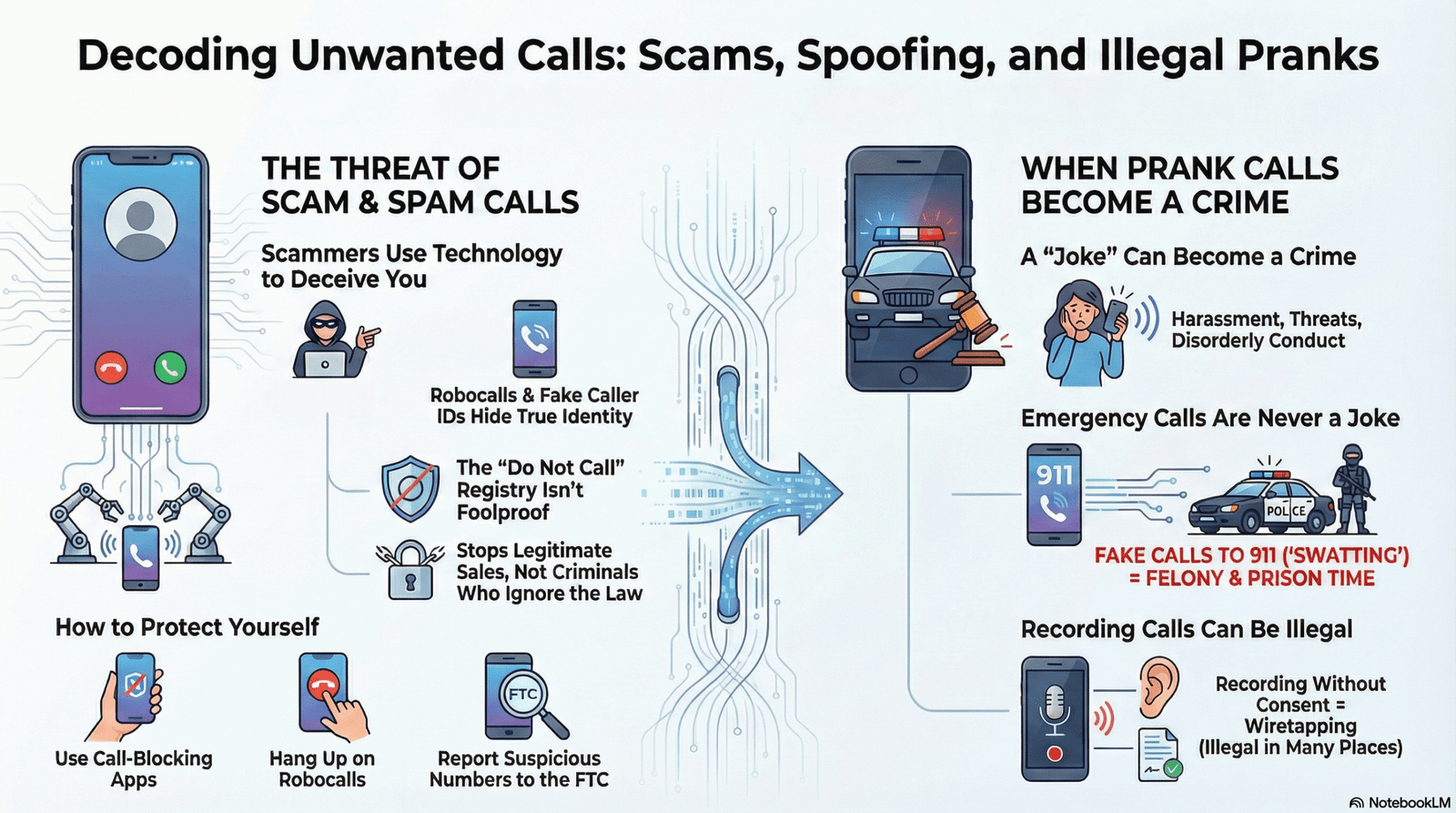
The quick answer to whether prank calling is illegal is yes, it can be. There is no single federal law that outright bans prank calls, but they become illegal if they include harassment, threats, or calling emergency services like 911.
This comprehensive guide will explain the various ways a seemingly innocent call can transform into a criminal offense, detailing the specific charges, potential penalties, and how to avoid significant legal consequences.
1. What Exactly is a Prank Call?
A prank call, also known as a crank call, nuisance call, or hoax call, is a telephone call made with the intent to play a trick or cause amusement, often by fooling the person on the other end. Prank calls can even include instances where someone hangs up the phone once the receiver has picked up.
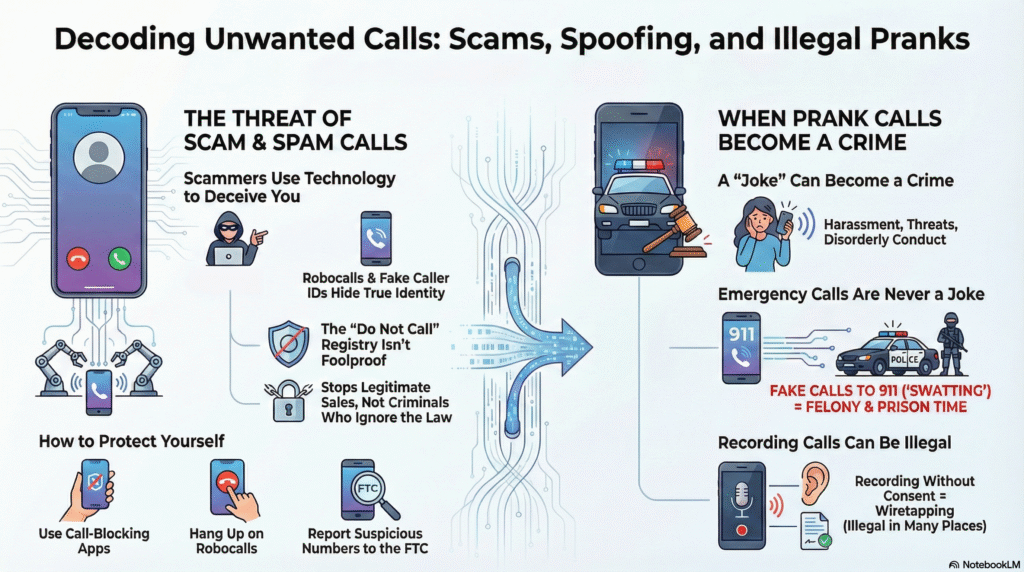
It is important to remember that even if intended as a joke, repeated or threatening prank calls can be considered harassment, stalking, or bullying, and can cause fear and distress to other people.
2. When Prank Calls Become Criminal Offenses
While the United States does not have a federal law addressing prank calling specifically, certain activities performed during a call can result in legal trouble. Many states rely on general criminal laws to prosecute prank callers, using offenses that cover breach of peace or unreasonably annoying a person.
Prank calls are explicitly illegal if they involve:
• Harassment
• Disorderly conduct
• Hate crimes
• Wiretapping
• Swatting calls (false bomb threats/emergency reports)
Harassment: Repeated or Threatening Calls
Harassment occurs when a prank call is repeated and involves the caller being intentionally mean or scary. This definition can also cover the time of day the calls are made; for example, prank calling late at night or early in the morning may be considered harassment by police. Harassment can lead to feelings of fear, anxiety, and helplessness for the victim.
State laws governing harassment through repeated, annoying phone calls include:
• California: Making annoying phone calls (Penal Code 653m) is a misdemeanor punishable by up to 6 months in jail and/or a $1,000 fine.
• Texas: Prank calling, considered harassment, is a Class B misdemeanor, potentially leading to a fine up to $2,000 and/or up to 180 days in jail.
• Nevada: Making annoying phone calls (Revised Statute 201.255) can result in an arrest and up to 6 months in jail or a $1,000 fine.
Disorderly Conduct
Prank calls can fall under the category of disorderly conduct if they use offensive language or attempt to disturb the peace. Generally, if a prank call becomes abusive, it can be a violation.
For example, in New York, disorderly conduct prank calls are a violation punishable by up to 15 days in jail and/or a $250 fine.
Hate Crimes
If an individual is targeted in a prank call due to their protected trait or characteristic, such as race, color, religion, national origin, gender, sexual orientation, or disability, it can result in charges for a hate crime. These are severe legal actions, with potential penalties of up to 10 years in prison, fines, or both, under 18 U.S. Code § 249.
Wiretapping: Illegal Recording of Calls
To legally record a call, all parties involved must consent, as governed by wiretapping laws. Recording a prank call without the recipient’s consent or knowledge can constitute illegal wiretapping. California, for instance, is a “2-party consent” state, meaning everyone on the call must consent to the recording.
Wiretapping violations can be charged as a misdemeanor or a felony. Misdemeanor convictions can result in up to one year in jail and a $2,500 fine, while a felony conviction can lead to up to three years in jail and $10,000 in fines.
3. The Most Serious Offenses: Swatting and 911 Calls
Prank calls involving emergency services are taken particularly seriously because they endanger public safety and divert critical resources.
Prank Calling 911/Emergency Services
Making prank calls to emergency services is far more likely to be a crime than other types of calls. This type of call can lead to up to a year in jail and/or a $1,000 fine for a first offense. Repeated or particularly harmful calls to 911, such as reporting a non-existent threat, can result in felony charges.
In California, callers can face misdemeanor charges if their call results in, or could result in, the response of an emergency services vehicle or an evacuation.
Swatting (False Reporting of Emergencies)
Swatting refers to fake reports of crimes, such as hostage situations or bomb threats, made to law enforcement agencies. According to 18 U.S. Code § 844, conveying false information about attempting to kill, injure, or damage property using fire can lead to up to 10 years in prison or a fine, or both.
The seriousness of swatting was highlighted by the Wichita Swatting Case in 2017, where a false report led to the fatal shooting of an innocent man. The prank caller, Tyler Barriss, received a 20-year prison sentence for his role in the incident.
4. Legal Exceptions and Risk Mitigation
Not all prank calls are illegal. A call may not be against the law if the caller does not harm, harass, or threaten the recipient, and the recipient is not bothered. For example, prank calls made to fast food places are usually legal unless they are repeated frequently enough to be considered harassment, or if they result in reputational damage, especially if recorded and posted publicly.
How to Avoid Legal Issues in Prank Calling
To keep away from potential legal problems, follow these rules:
• Avoid repeatedly calling the same person.
• Never include threats or blackmail in prank calls.
• Do not record calls without the consent of all parties.
• Refrain from prank calling emergency services like 911.
• Do not pretend to be someone else or use other people’s numbers.
• End the call immediately if someone asks you not to contact them again.
• Contact only those who will understand your humor; avoid calling businesses or random numbers.
5. Reporting Unwanted or Abusive Prank Calls
If you are being targeted by abusive or aggressive prank calls, you should take steps to protect yourself.
1. Remain calm and avoid engaging with the caller.
2. Make note of details such as the time, date, and any identifiable information.
3. Consider blocking the caller’s number.
4. If the call goes too far or involves a real threat, report it to the authorities. Contact your local police and provide all important details about the call. The Minnesota Attorney General’s Office, for example, notes that they can sometimes trace the call to its source.
5. You can also file reports with federal agencies, providing information like the time, date, and the number displayed on the caller ID:
◦ The Federal Trade Commission (FTC): The FTC enforces violations of the Do Not Call Registry and federal laws regulating autodialed/prerecorded message calls and interstate fraud perpetrated over the telephone. You can report unwanted or scam calls to the FTC.
◦ The Federal Communications Commission (FCC): The FCC has authority to enforce federal laws regulating robocalls and caller ID spoofing.
Conclusion: Understanding the Risks
While often initiated as a joke, the question, “Is prank calling illegal?” has a definitive answer: yes, under many circumstances. Pranks become serious offenses when they involve harassment, threats, disorderly conduct, or misuse of emergency services. Depending on the severity of the prank, penalties can include monetary fines, probation, or significant jail time, with swatting carrying potential sentences of up to 10 years in prison.
Victims of such calls have the right to report them to law enforcement and regulatory bodies like the FCC and FTC. If you find yourself facing legal trouble due to a prank call, it is essential to contact a criminal defense lawyer immediately for expert guidance.
Note: If you wanted to know exactly how a country number will look like then you can visit our random phone number generator.
Frequently Asked Questions (FAQs)
Is it a crime to call random numbers?
Calling random numbers generally is not illegal. However, the police can charge you with harassment if the calls continue too often or if they involve insulting or threatening a person.
Can police trace a prank call?
Yes, police can trace prank calls because each number has an associated ID. This is especially true if the calls contain threats or are related to emergency services.
What are the general penalties for illegal prank calling?
If the police arrest you for a typical offense like harassment, you may face a misdemeanor penalty, which can include up to $1,000 in fees and a year in jail. If the call was directed at 911 or another emergency service, you should expect a criminal case, and charges like swatting can lead to up to 10 years in prison.
| Legal Context | Penalty Range (Examples) | Offense Type |
| Harassment (e.g., California/Nevada) | Up to 6 months in jail and/or $1,000 fine | Misdemeanor/Crime |
| Disorderly Conduct (e.g., New York) | Up to 15 days in jail and/or $250 fine | Violation |
| Wiretapping Violations | Misdemeanor: Up to 1 year/$2,500 fine | Misdemeanor/Felony |
| Prank Calls to 911 | Up to 1 year in jail and/or $1,000 fine | Misdemeanor |
| Hate Crimes (Federal Law) | Up to 10 years imprisonment, fines, or both | Felony |
| Swatting (Bomb Threats) | Up to 10 years imprisonment or fine, or both | Felony |